
Dropshipping didn’t disappear.
It just stopped forgiving mistakes.
A few years ago, it felt like a shortcut. Find a product. Copy a listing. Run ads. Wait for sales. The barrier to entry was low, and the margin for error felt wide.
In 2026, that version of dropshipping barely exists.
Not because the model failed, but because the environment matured.
The Model Still Exists. The Easy Version Doesn’t.

Dropshipping is still used everywhere. Large retailers rely on it. Niche brands use it to test products. Entire supply chains still run this way.
What changed is who succeeds.
Early on, showing up was enough. Today, showing up without differentiation gets ignored.
The business didn’t vanish. The cushion did.
Thin Margins Expose Weak Businesses Fast

One of the hardest adjustments for new sellers is realizing how tight the math actually is.
Product costs, shipping, platform fees, refunds, chargebacks, and advertising all pull from the same narrow margin. A business can look profitable on paper while quietly losing money in practice.
When margins are thin, mistakes become expensive.
A delayed shipment isn’t just a bad experience. It’s a refund.
A vague policy isn’t just sloppy. It’s a dispute.
A copied product page isn’t just lazy. It’s a trust problem.
Dropshipping amplifies small issues because there’s so little room to absorb them.
Trust Became the Real Barrier
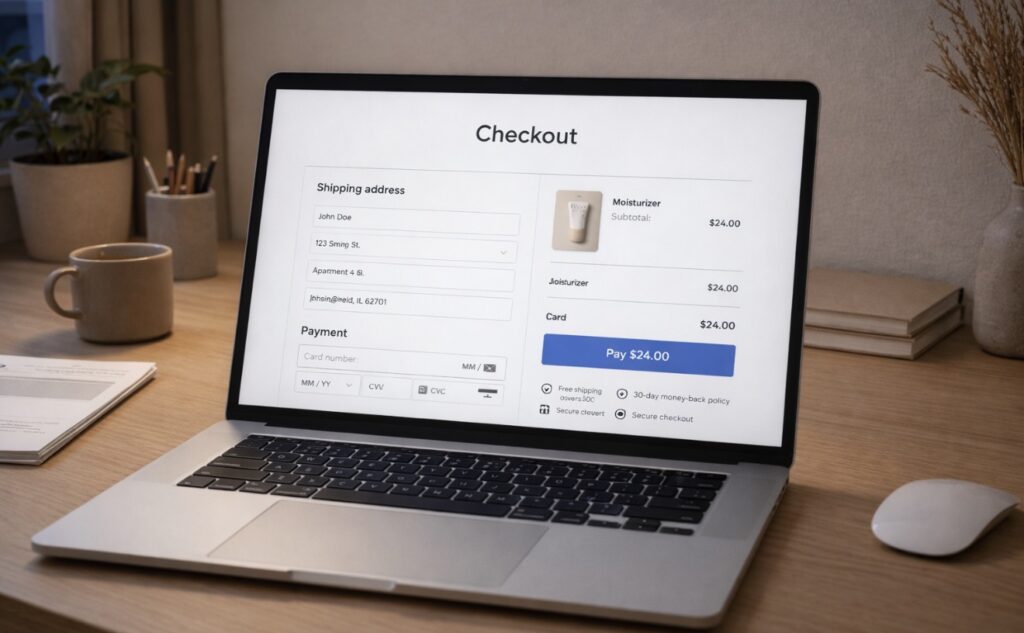
In 2026, customers are more cautious than they used to be.
They recognize generic sites. They question long delivery windows. They expect clear policies and fast responses.
This makes trust a business requirement, not a nice-to-have.
Dropshipping didn’t become harder because people got smarter. It became harder because expectations rose.
Sites that feel interchangeable struggle. Sites that feel intentional still convert.
Shipping Speed Is No Longer Optional
Long shipping times used to be tolerated.
Now they’re questioned.
Late deliveries don’t just hurt reviews. They create compliance risks, refunds, and platform issues. Sellers are held responsible for promises they didn’t personally control.
This is one of the quiet reasons many dropshipping stores fail. Not suddenly, but gradually, through mounting friction.
Dropshipping Isn’t the Business. Distribution Is
This is the part most people miss.
Dropshipping is a fulfillment method. It handles logistics. It does not create demand.
The real business is attention, trust, and reach.
Stores that rely entirely on ads feel this pressure first. Every sale must be bought. Costs rise. Margins compress. One bad month breaks momentum.
Stores with distribution don’t feel that same fragility. Traffic arrives without constant spending. Relationships compound. The business breathes.
The difference isn’t the supplier. It’s how customers arrive.
Why So Many People Say It’s “Dead”
Dropshipping feels dead to people who expected it to be simple.
The version that rewarded minimal effort is gone. What remains looks like a real business, with real constraints and real trade-offs.
That reality doesn’t kill the model. It filters who stays.
So, Is It Still Worth It?
That depends on how you define it.
If you’re looking for a fast, low-effort way to make money online, no.
If you’re willing to build trust, manage margins carefully, choose suppliers deliberately, and treat distribution as the real work, dropshipping can still function as part of a business.
It didn’t become impossible.
It became honest.
Final Thoughts
Every online business model goes through this phase.
Early success creates noise.
Noise creates competition.
Competition removes shortcuts.
Dropshipping in 2026 isn’t broken. It’s exposed.
And for people willing to accept what it actually is, not what it was marketed as, that clarity matters more than hype ever did.
Leave a Reply