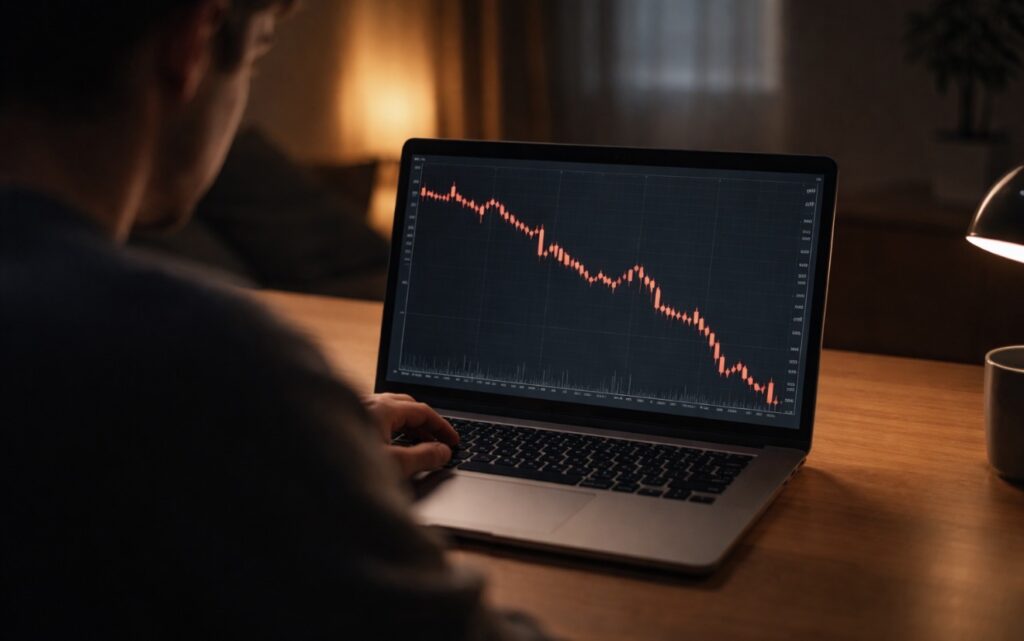
Investing is one of the few things that rewards patience almost unfairly.
And yet most people don’t stay long enough to experience that reward.
They start with good intentions. They open an account. They buy something sensible. They tell themselves they’re finally thinking long-term.
Then a few weeks later, they stop.
Not because investing stopped working, but because the process feels worse than they expected.
Early Investing Feels Like Nothing Is Happening
One of the hardest parts is that investing doesn’t give immediate feedback.
You put money in and… nothing changes.
The growth is slow. The numbers barely move. It feels like waiting in the dark for proof that you made the right decision.
Compounding is real, but early on it’s invisible. That makes patience feel pointless, even when it isn’t.
Losses Feel Personal, Even When They’re Normal
A beginner expects volatility intellectually.
But emotionally, the first drop feels like failure.
This is loss aversion. Losses hurt more than gains feel good. Even a small decline can trigger the sense that something went wrong, even if it’s completely normal market behavior.
The market doesn’t need to crash for people to panic. A modest red week is enough.
Watching Too Closely Makes It Worse
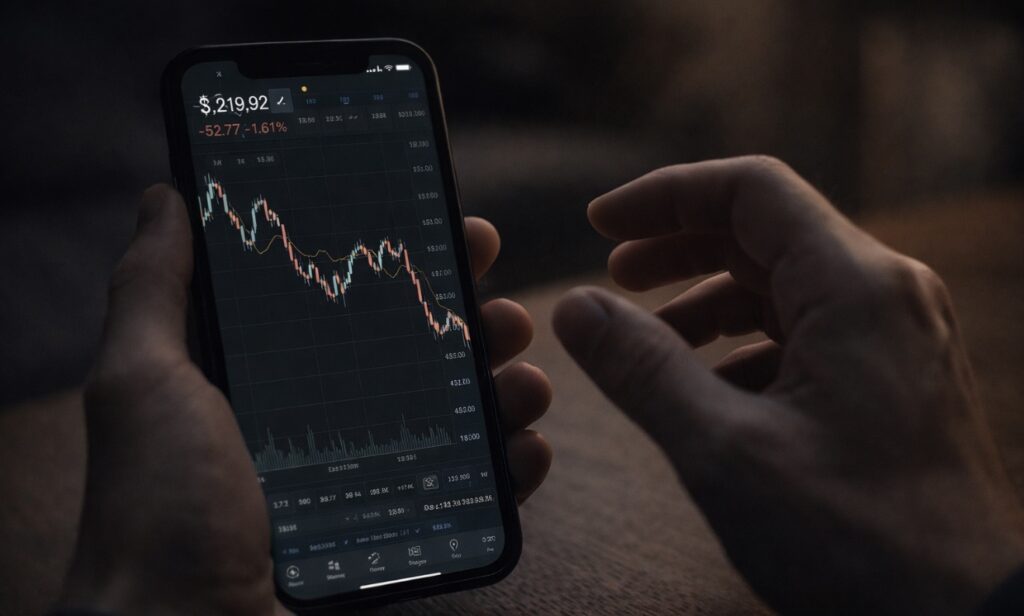
Most investors quit because they look too often.
This is where myopic loss aversion comes in. The more frequently you check, the more losses you experience psychologically, even if the long-term trend is fine.
Short-term noise starts to feel like truth.
Daily movement becomes a story about your future.
And that makes long-term investing feel emotionally impossible.
The Future Feels Too Distant to Care About

Investing is a future reward system.
The payoff is years away.
Humans aren’t built for that. Present bias makes today feel urgent and tomorrow feel abstract.
So people delay.
They pause contributions.
They tell themselves they’ll restart later, when things feel clearer.
But investing doesn’t reward clarity. It rewards time.
Recent Pain Feels Permanent
When the market drops, beginners assume it will keep dropping.
When a stock underperforms for a month, they assume it was a mistake.
This is recency bias. The most recent experience dominates your thinking, even when history says otherwise.
A short bad period starts to feel like the whole story.
That’s often when people give up.
Quitting Often Feels Like Relief
Most investors don’t quit because they made a spreadsheet decision.
They quit because they want emotional relief.
Selling removes uncertainty instantly.
It replaces discomfort with closure.
Even when it’s the wrong move financially, it feels like peace psychologically.
That’s why quitting is so common. It’s a coping mechanism more than a strategy.
Good Investing Is Boring, and That’s the Point
People enter investing expecting action.
But long-term investing is mostly inactivity.
It’s holding through crashes, boredom, slow years, and doubt.
The investors who succeed aren’t the ones who feel confident all the time.
They’re the ones who stay invested even when confidence disappears.
Final Thoughts

Investors give up quickly because investing challenges human psychology at every step.
Loss feels heavier than gain.
The future feels smaller than the present.
Noise feels more real than time.
And patience feels unrewarded right before it starts working.
Most people don’t fail because they chose the wrong asset.
They fail because they couldn’t sit still long enough for time to do what it does.
That’s the real difficulty.
And it’s also the real advantage.
Leave a Reply