
The idea behind forming an LLC or corporation is simple.
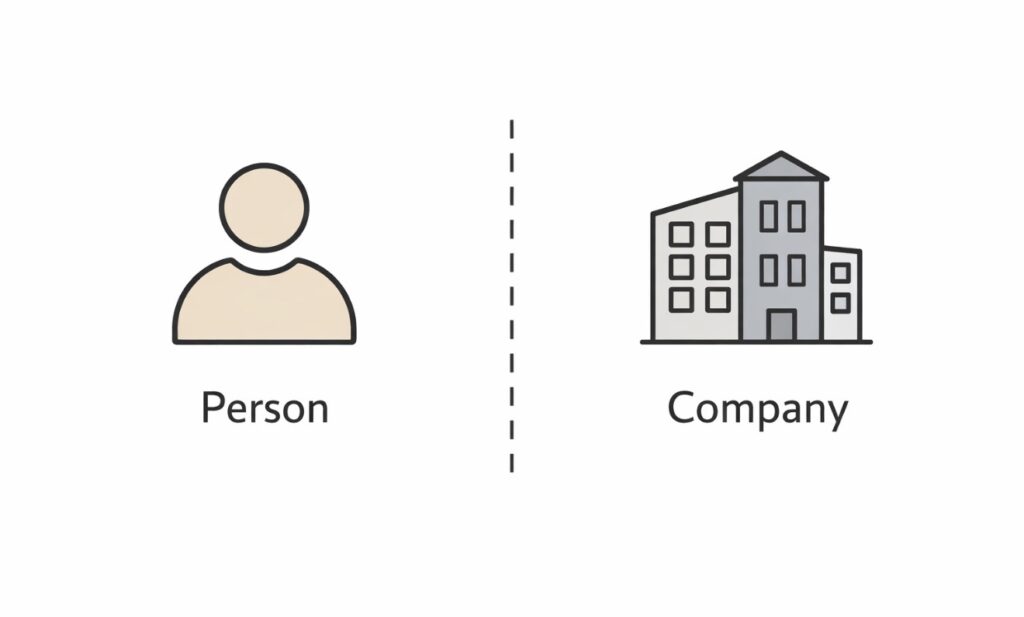
The business exists as its own legal entity.
The owner exists separately.
That separation is called the corporate veil.
In most cases, it’s the reason business debts, lawsuits, and obligations stop at the company level instead of reaching into an owner’s personal assets.
But in e-commerce, that separation isn’t always as strong as people assume.
What the Corporate Veil Actually Does
The corporate veil is not a shield against lawsuits.
It’s a rule about who is responsible once a lawsuit exists.
When the veil holds, liability usually stays with the company. If the business is sued, the business answers. Personal assets are generally outside the case.
This is why LLCs and corporations are widely used in online commerce.
What “Piercing the Corporate Veil” Means
Piercing the corporate veil is a legal concept courts use when they decide that the company and the owner were not meaningfully separate.
When that happens, plaintiffs can try to reach the owner directly.
This is not common, and it’s not automatic. Courts describe it as an exceptional outcome, used when the company appears to be more of a formality than a real, independent entity.
How Courts Think About the Veil
There is no universal checklist.
Courts look at the overall picture.
They ask whether the business actually operated as its own entity, or whether it functioned as an extension of the owner.
This analysis is often called a “totality of circumstances” review. One issue alone rarely decides the outcome. Patterns matter more than isolated mistakes.
Why E-commerce Businesses Come Up in These Cases

E-commerce companies often operate with minimal physical presence.
There may be no office, no employees, and very few formal processes. That’s not illegal. But it does mean the line between “person” and “company” can appear thin if the business is challenged.
Many online businesses are also run by a single individual, which increases scrutiny when disputes arise.
Personal Liability Can Exist Without Piercing the Veil
This is where a lot of confusion comes from.
An owner doesn’t have to lose the corporate veil to be named personally in a lawsuit.
In U.S. law, individuals can be held personally liable for their own actions, even when acting on behalf of a company. That includes things like direct misrepresentations, personal involvement in wrongful conduct, or certain statutory violations.
In those cases, the company still exists. The veil still exists. But personal conduct becomes the basis of liability.
That distinction is often missed in online discussions.
The Corporate Veil Is About Structure, Not Immunity
An LLC or corporation does not make someone lawsuit-proof.
It creates a legal structure that separates identities.
When that structure looks real, courts tend to respect it.
When it looks artificial, courts look past it.
In e-commerce, where businesses are fast-moving and informal, that line can become blurred without anyone noticing.
Final Thoughts

The corporate veil is one of the most important ideas in U.S. business law, and one of the most misunderstood.
It doesn’t stop lawsuits from happening.
It doesn’t erase responsibility.
It doesn’t guarantee privacy or protection.
It defines where liability is supposed to land, and courts decide whether that separation makes sense in each case.
In online commerce, where the business often looks indistinguishable from the person behind it, that question matters more than most people realize.
Leave a Reply